Sequels and the Weight of Reader Expectations
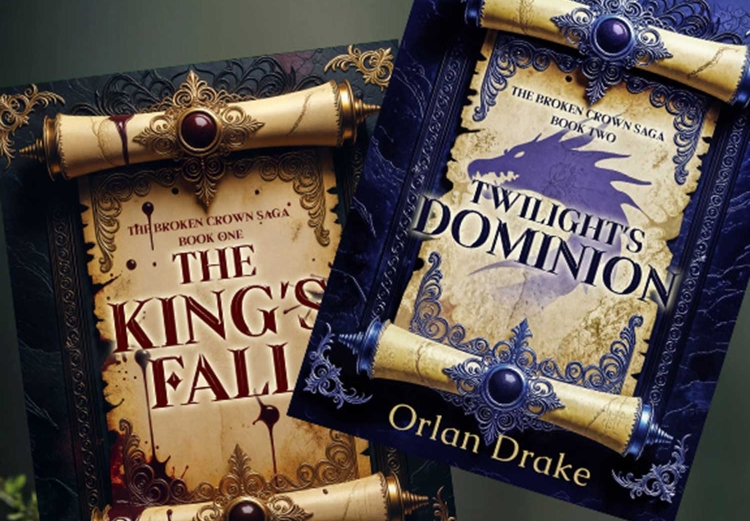
When a reader picks up a second book, they are not coming to it empty-handed.
They carry everything the first book gave them. They carry the characters they decided to trust, the world they agreed to believe in, the emotional contract they entered into somewhere around page thirty and renewed with every chapter that followed. They carry their own theories about what comes next, their own unresolved questions, their own quiet hope that the thing they loved will still be the thing they find.
This is the gift a successful first book gives a writer. It is also, in almost equal measure, a pressure that has to be managed rather than avoided, or it will manage you.
The Reader Who Returns Is Not the Same Reader
Here is the first thing worth understanding about sequels: the person who reads your second book is not the same person who read your first.
Not because they have changed, though they may have. But because of what they now know.
When a reader came to your first book, they came without preconceptions. They did not know what to expect from your prose style, your pacing, your sense of humour, or the shape of your plot turns. They were discovering the rules of your world as they went, which means every surprise was genuinely surprising, every character reveal landed on a clean surface.
By the time they open the second book, they have calibrated. They have a picture of you in their head, not you as a person, but you as a maker of things. They have expectations not only about what will happen next in the story, but about how you will tell it. That calibration is earned trust. But it also means the bar has moved. What felt fresh and bold in the first book will feel merely competent in the second if you repeat it, and what felt like a minor weakness the first time around will feel like a confirmed habit.
The reader who returns brings loyalty. They also bring, though they would not phrase it this way, a hypothesis about who you are as a writer. The sequel either confirms or complicates that hypothesis.
What Readers Think They Want
If you were to ask readers what they want from a sequel, most of them would say some version of: more of the same, but different.
This sounds straightforward. It isn't.
"More of the same" means they want the thing they loved to still be present. The cast of characters they became attached to. The world they found compelling. The particular quality of tension or warmth or atmosphere that drew them in. They want to come home to a familiar house.
"But different" means they do not want to feel like they have simply read the same book again. They want the story to go somewhere new. They want to be surprised. They want the stakes to be higher, or more complex, or at least changed. They want to feel that time has passed in the world, that consequences have settled, that the second act is genuinely a second act and not just the first act in a different outfit.
The difficulty is that these two desires exist in tension with each other. Lean too far toward continuity and the book feels like a retread, a safe extension of what came before rather than a genuine next chapter. Lean too far toward novelty and readers feel that something they loved has been taken from them, or that the rules of the world they trusted have been rewritten without their consent.
Every sequel is, at its heart, a negotiation between these two forces. There is no formula for getting it right. There is only the judgment call, made a thousand times across a manuscript, about which pull to honour on this page, in this scene, for this particular character.
The Danger of Fan Favourites
Characters are where expectation most reliably becomes a trap.
By the end of a successful first book, readers have strong opinions about the people in it. They have their favourites. They have the characters they found most compelling, most funny, most affecting. And they want more of them.
This is flattering. It is also dangerous if the writer mistakes "the readers love this character" for "I should give them more of this character doing what they already love."
Characters who stay the same are not the same characters. A person who is exactly as funny, exactly as reckless, exactly as principled in the second book as they were in the first has not been allowed to live. They have been preserved. And preserved things do not move. They do not surprise. They do not earn new emotional weight because they have not genuinely experienced anything; they have just repeated a performance.
The characters readers love are almost always characters who were going somewhere when the first book ended. They were in motion. Something was unresolved in them. The reader leaned forward because they wanted to see what the character would do next, which implies that the next thing would be genuinely new.
The sequel's job is to keep those characters in motion. To let them be changed by what has happened. To allow the consequences of the first book's events to have actually landed in these specific human beings. The readers want to spend more time with people they care about, but what they actually want — if you press them on it — is to be surprised by those people. To see them react in a way that is completely consistent with who they are and yet arrives at somewhere unexpected.
Characters who do not grow betray the reader's investment. So do characters who grow so dramatically that they no longer feel like themselves.
The path between those two failures is narrow and requires the writer to know each character more deeply in the second book than they did in the first.
Plot Expectations and the Problem of Stakes
A well-structured first book tends to establish a certain level of threat. By the end of it, the reader has a sense of the world's risk calibration: what kind of violence is possible here, what kind of loss is survivable, what the author is and isn't willing to do to the people in the story.
This creates a problem for the sequel.
The simplest instinct is escalation: if the first book threatened the city, the second book should threaten the kingdom. If the first book's villain commanded a hundred soldiers, the second should command a thousand. More. Bigger. Higher. The reader wants the stakes to be raised, so raise them.
This instinct is not wrong, exactly. But it is incomplete.
Escalation without grounding becomes noise. If the threat simply gets larger while remaining formally similar, the reader can sense the inflation. They know the currency has been debased. The fact that the stakes have been described as higher does not make them feel higher if the characters facing them feel the same as they did before, if the world's logic has not genuinely deepened to accommodate the new scale.
The more useful kind of escalation is not primarily about size. It is about complexity. The second book's threat should feel more difficult, not because it involves more soldiers or a darker prophecy, but because the characters are dealing with it at a point in their lives when they are also managing the weight of the first book's events. Because what they now know about the world and about themselves makes the new danger harder to face cleanly, without complication, the way it might have been faced by the people they were before the story began.
This is what makes sequels feel earned rather than merely continued. Not larger threats, but more deeply inhabited ones.
The Contract With the World
Alongside the contract with characters and with plot, there is a third contract: the one the first book made with the world it built.
Readers invest in fictional worlds. They do this more consciously than they sometimes admit. They pay attention to how the rules work, how geography shapes possibility, and how political structures, magical systems, and social hierarchies operate. They build a mental model of the world that they carry alongside the story, and they use it to generate their own expectations and theories.
The sequel inherits this investment entirely.
It means that when new elements are introduced, they need to feel discovered rather than invented. When the world is expanded, the expansion needs to feel like something that was always true and has only now been encountered, not like something grafted on to serve the plot's needs in the moment. When a rule the reader thought they understood turns out to have a nuance they missed, it needs to feel like the nuance was always there, waiting to be found, not like the writer simply changed the rule because it was convenient.
This is an argument for planning more than people often think. Not necessarily detailed outlines (though those help), but a deep sense of the world's inner logic and consistency, held firmly enough in the writer's own mind that new discoveries feel organic rather than improvised. Readers can tell the difference between a revelation that was planted and a revelation that was retrofitted. They may not be able to articulate how they know, but they know.
The first book makes a promise about the world. The sequel is under an obligation to honour that promise even when it is also complicating it.
The Specific Difficulty of Second Books
In a series of any length, the second book has a particular structural challenge that neither the first nor the third share.
The first book has the freedom of beginning. It can take its time establishing the world and the people in it. It arrives without comparison. The third book (or the fifth, or the final volume) has the freedom of resolution, it is building toward a defined destination, and that momentum carries a great deal.
The second book is the hinge. It must continue something without yet being able to conclude it. It must deepen without completing. It is, structurally, the middle of a longer thing, and the middle is always harder to make feel essential rather than connective.
The middle is where readers are most at risk of feeling that a story is treading water. It is where the sense of forward momentum must be entirely generated by character development and plot complication, without the energy of beginning or the pull of ending. It is where writers must resist the temptation to use the book primarily as a bridge to where they really want to go, because a book experienced as a bridge is a book that does not feel like it fully exists.
Every scene in a second book must justify itself on its own terms. Not as a setup. Not as context. As a story, now, with stakes that matter in this book, regardless of what they also make possible in the next.
What Good Sequels Actually Do
The sequels that work, the ones readers remember not just as continuations but as genuinely great books, tend to share a quality that is worth naming.
They make the first book look different in retrospect.
Not smaller. Different. They recontextualise what came before, so that the reader's experience of the whole story is richer than either book alone. They show that the first book, for all its completeness as a reading experience, was the beginning of something whose full shape was not yet visible. And they do this not by undermining what the first book established, but by deepening it: by showing that the world was more complex, the characters were more interesting, the themes were more layered than even a good first reading had revealed.
This is the real work of the sequel. Not to repeat. Not to simply escalate. To use what the first book built as the foundation for something that could not have existed without it, and to deliver that thing with the craft and confidence that comes from knowing a world deeply enough to find new things in it.
Reader expectations are not the enemy of this work. They are the material.
The reader arrives with a hypothesis about the world. The sequel's job is to be true enough to that hypothesis to keep their trust, and surprising enough to make them glad they stayed.
That balance is hard. It is also, when it works, why people read series at all.