Power After The Crown Falls: Writing Consequences in Epic Fantasy
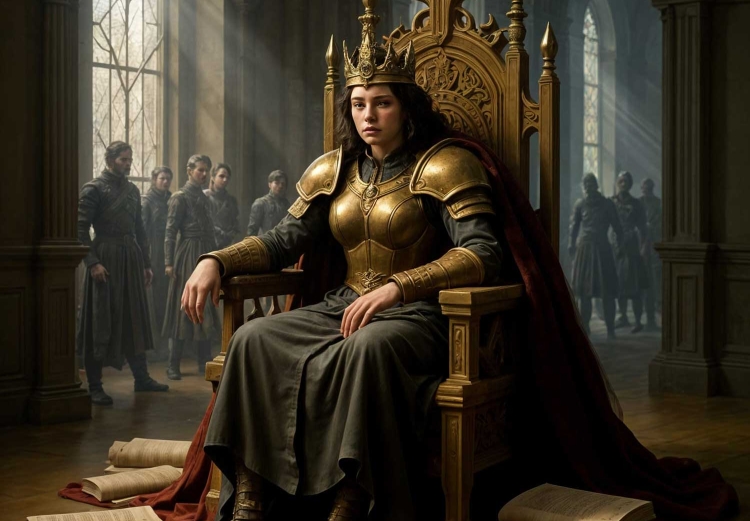
There's a moment in almost every epic fantasy where the impossible is achieved. The ring goes into the fire. The sword finds the stone. The tyrant crumbles to dust and shadow. The camera — metaphorical or literal — pulls back to show the heroes, battered and weary, bathed in the golden light of victory.
It's a gorgeous moment. And then, for so many stories, the curtain falls.
But here's the thing: for readers who love truly rich, lived-in fantasy worlds, the moment after victory is often where things get really interesting. Because power doesn't disappear when the villain dies. It just... changes hands. And that transition? That's where your most compelling drama lives.
The Vacuum Problem
Every triumphant overthrow creates a power vacuum. Nature abhors a vacuum. So do political systems, religious institutions, merchant guilds, and ambitious second cousins.
When your heroes defeat the empire, the empire doesn't simply stop existing. Its tax collectors are still out there. Its soldiers need to eat. Its bureaucrats have been managing grain distribution for thirty years and they're the only ones who know where the records are. The infrastructure of oppression and the infrastructure of governance are often, horrifyingly, the same infrastructure.
"The hardest part of revolution isn't winning — it's figuring out who empties the bins on Tuesday morning."
This is where so much epic fantasy stops short. It treats "defeating the dark lord" as synonymous with "solving the problem." But power doesn't work that way, and your readers — especially your adult readers who have watched institutions fail in real time — know it doesn't work that way.
Three Kinds of Post-Victory Chaos
If you want to write compelling aftermath, it helps to understand what kinds of consequences actually emerge when power structures collapse. Here are the three big ones:
- Structural - Who feeds the capital now? Who collects the taxes? Which laws are still in force, and who enforces them?
- Interpersonal - Your band of heroes agreed on one thing: defeat the enemy. Now they disagree on everything else — and old loyalties fracture.
- Ideological - What did you actually fight for? The answer seemed obvious during the war. It's a lot murkier when you have to write it into law.
The most satisfying aftermath stories weave all three together. Your hero is trying to stabilize grain supplies (structural), while their oldest ally is angling for regional autonomy they were promised (interpersonal), while a new religious movement is reinterpreting the whole war as a divine mandate for something nobody voted for (ideological).
The Hero Problem
Here's the uncomfortable truth that the best post-victory fantasy doesn't shy away from: the skills that make someone good at overthrowing a regime are often exactly the wrong skills for running one.
Guerrilla leaders make poor administrators. Charismatic rebels make poor diplomats. The person who was brilliant at improvising under impossible pressure may find themselves utterly lost when the situation requires patient, unglamorous institution-building.
Think about it this way - Your protagonist spent three books learning to act decisively, trust their instincts, and inspire loyalty through force of will. Now they need to learn to sit in committees, compromise on things they care about, and accept that good intentions don't make good policy. That's not a lesser story — that's a harder one.
This is part of what makes works like Ursula K. Le Guin's writing or the later sections of K.J. Parker's novels so enduringly fascinating. They don't flinch from the idea that your hero's greatest virtues might become liabilities the moment the fighting stops.
The People Who Liked It the Way It Was
This one is underused and underappreciated: not everyone wanted the regime to fall.
Not because they're secretly evil. Because they had a merchant business that relied on imperial trade routes. Because their family served the crown for six generations and their identity is bound up in that service. Because the empire was terrible, yes, but at least the harvests were predictable and the bandits were controlled. Because the new regime's vision of freedom doesn't include them.
A nuanced post-victory story gives voice to these people — not to validate them, but to acknowledge that revolutions create losers as well as winners, and the losers don't always have the decency to be cartoonishly villainous about it.
The most interesting antagonist in your aftermath story might be someone who genuinely believes they're protecting their people — and might even be right about some of it.
Practical Craft: How to Write This Well
Ground the politics in the personal. Readers don't connect with "the trade treaty negotiations are failing." They connect with a character who can't afford to feed their family because the new tariffs have collapsed the economy they relied on. Find the human face of every structural problem.
Let your heroes be wrong. Not catastrophically, cartoonishly wrong — but genuinely, believably wrong in the ways that well-intentioned people with incomplete information are wrong. They make a policy that makes sense on paper and devastates a community they didn't think about. This is not a betrayal of the character; it's a deepening of them.
Use time jumps thoughtfully. A chapter set six months after victory will show you different problems than a chapter set six years after. Think about which temporal scale serves the consequences you want to explore. Immediate aftermath is chaos and grief and euphoria. Longer aftermath is the slow calcification of compromises into institutions.
Give the antagonists a real argument. If the person opposing your heroes' new order is only wrong, they're not very interesting. If they have a genuinely compelling point — even if their methods or goals are ultimately unacceptable — the conflict becomes something readers actually have to think about.
The Quiet Victories Are Worth Writing Too
Not everything about aftermath has to be grim. There's a particular joy in writing small, quiet moments of things getting better. A market reopening. Children playing in a street that was a battlefield a year ago. A character who spent the whole series unable to go home finally going home.
These moments land harder in an aftermath story precisely because they're not taken for granted. Your characters — and your readers — know what it cost to get here. The peace has weight because the war had weight.
The darkness and the hope aren't in tension with each other. Used well, they're in conversation.
The crown falls. The tyrant is defeated. The story, if you let it, is just beginning. The most interesting question in epic fantasy isn't "will they win?" — it's "what do they do with the winning?" Give your world — and your readers — the chance to find out.