Why Moral Grey Feels More Honest Than Good vs Evil
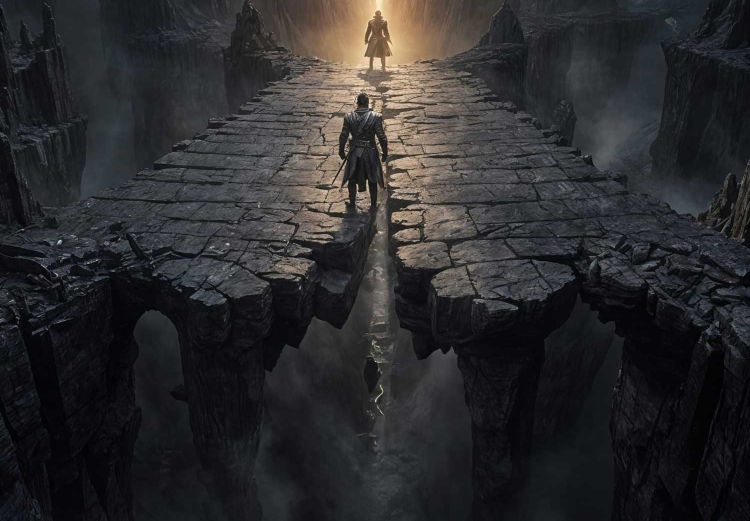
There's a particular kind of discomfort that comes from a character who does something terrible for a reason you understand.
Not a reason you agree with. Not a reason you would act on. But a reason that, if you're being honest, you can follow the logic of. You can see the path that led them there. You can see what they were protecting, or what they had already lost, or what they believed was true. And that understanding sits in you like a stone, because it doesn't excuse anything, and yet it changes everything.
That discomfort is the texture of real life. And it is also, when fiction gets it right, the texture of genuine tension.
The old model is seductive. Good on one side, evil on the other, a clear line between them that the story dares you to cross. It's satisfying in the way a locked door is satisfying, you know exactly what it means, you know exactly what's being kept out. There's comfort in it. There's even a kind of grandeur. The Dark Lord doesn't have doubts. The Chosen One doesn't need to negotiate with their own conscience. Everything is clean and legible, and the reader always knows where they stand.
The problem is that it doesn't ask anything of you.
When the villain is simply evil, hungry for power, contemptuous of life, motivated by nothing more complex than malice, you never have to sit with anything. You root for the hero, you fear the villain, you watch the right side win, and you close the book unchanged. The story has confirmed what you already knew: evil looks like that, and you are nothing like it, and the world divides cleanly into those who are and those who aren't.
That's reassuring. But reassurance is not the same as truth.
The writers who disturb us most deeply are the ones who refuse that reassurance. Who builds characters that make the line impossible to find, not because they're nihilists who believe there is no line, but because they understand that real human beings rarely stand cleanly on one side of it.
Think of what it takes to write a character like that. Not a villain given one humanising detail as a grace note, a dead child mentioned in passing, a single moment of mercy before the atrocities resume. That's not moral complexity; that's a villain with a backstory. Real moral grey isn't a detail. It's a condition. It's a character who has values that make sense, who pursues ends that are recognisable, who causes harm through the same faculties, conviction, love, fear, pride, that cause most of the harm in the actual world.
A character who believes they are doing good, even as they do terrible things, is not a paradox. They are a portrait.
This is where the tension comes from, and it's a different kind of tension than the kind generated by a chase scene or a battle or a ticking clock. Physical danger creates suspense. Moral ambiguity creates dread. The suspense resolves when the chase ends. The dread doesn't resolve; it deepens, because the more you understand a morally grey character, the more the story implicates you in them.
You root for them, against your better judgment. You find yourself hoping they get away with it, or that they're right, or at least that the full account of what they did will be complicated enough to soften the verdict. You catch yourself reasoning on their behalf. And then you catch yourself catching yourself, and the story has done something that a simple good-versus-evil narrative can never do: it has made you conscious of your own capacity for rationalisation.
That's not comfortable reading. It isn't supposed to be.
The characters who linger longest tend to be the ones whose choices illuminate something about how harm actually enters the world. Not through pure malice, malice is rare, and most people never encounter it. Through conviction. Through love that calcifies into control. Through the belief that the end being sought is important enough to justify the cost, and the refusal to look directly at who pays it. Through the slow, quiet accommodation of small compromises until the person you've become would be unrecognisable to the person you started as.
This is how people become capable of terrible things. Not by choosing darkness at a single dramatic crossroads, but by making a series of choices that each seemed reasonable at the time, each defensible, each informed by genuine values and arriving somewhere they never intended to go.
A story that shows that process, honestly and without flinching, is doing something more than entertaining. It's doing what fiction at its best has always done: it's showing us ourselves at a safe enough remove that we can actually look.
The tension in moral grey fiction is not just about not knowing which side will win. It's about not knowing which side is right. It's about caring for characters whose choices you condemn. It's about arriving at the end of a story and finding that the question it opened is still open, that no clean resolution has come to close it, because clean resolutions are what you get in stories that were never willing to ask the real question in the first place.
That discomfort is the whole point.
It's not a failure of the story to give you a villain you can understand, or a hero you can't entirely trust, or a choice with no right answer and consequences on every side. It's not a failure of moral clarity. It's moral clarity of a different and more demanding kind: the kind that doesn't let you off the hook by telling you that evil is always somewhere else, in someone else, wearing a face nothing like yours.
The best fiction in this mode doesn't abandon the idea that actions have weight, that choices matter, that some things are genuinely wrong. It insists on all of that more ferociously than the simple version does. But it refuses to let you arrive at those conclusions without earning them, without sitting with the full human complexity of why people do what they do, and what it costs, and what it looks like from inside the choice.
There's a scene I keep returning to, in the kind of fiction that does this well. Not a scene from a specific book, but a type of scene: the moment when two characters who have been in opposition finally understand each other. Not agree, understand. When the argument being made by the other side becomes legible, and neither character can dismiss it anymore, and both of them are worse off for the knowledge.
Those scenes are the ones that stay with you. Not because they resolve anything, but because they don't. Because they give you the full weight of the situation without the relief of an answer. Because they trust you to hold the complexity without being handed a conclusion.
That's what moral grey does, when it's done with honesty and intention. It trusts the reader. It believes that the discomfort of not-knowing is more useful than the comfort of false certainty. It makes the argument, quietly, that the world is not divided into the comprehensible and the monstrous.
That most of the things worth being afraid of are entirely, uncomfortably human.
And that is a story which helps you see that it is not making you despair. It's making you awake.