Writing Group Dynamics in Epic Fantasy
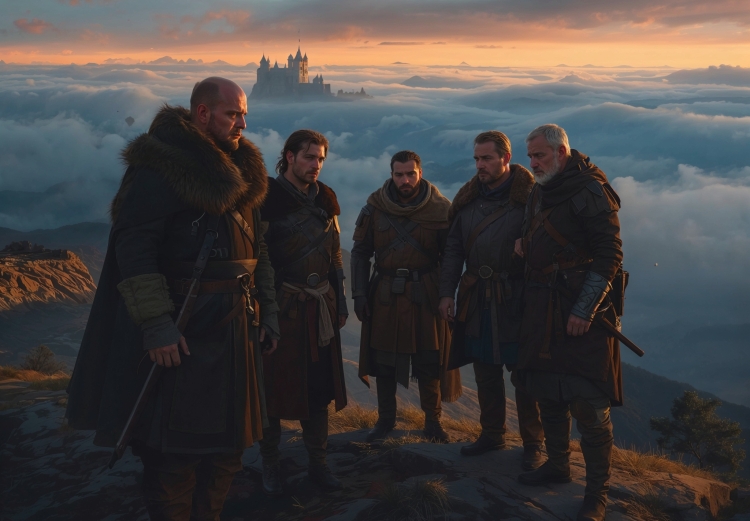
There is a particular kind of storytelling problem that the group creates, and it is not the one most writers think it is.
The problem is not how to get several characters moving in the same direction. That is a logistics question, and logistics, however tedious to work out, is workable. The real problem is more interesting and more treacherous: how to make the group itself a living thing, a system with its own pressures and contradictions and hidden load-bearing walls, so that what happens between the characters is not merely backdrop to the plot but is the plot, or at least the part of the plot that readers will still be thinking about long after the dragons and the armies have faded.
Epic fantasy is drawn to groups almost instinctively. The fellowship, the company, the band of unlikely allies. The genre has used this structure so often and so successfully that it can start to feel like furniture. But the best versions of it are not furniture. They are architecture. The group is not a vehicle for getting characters from one place to another. It is a container under pressure, and what it is under pressure from is the people inside it.
What makes a group dynamic work on the page is not that the characters like each other, or even that they do not like each other. It is that they need each other, and that the need is complicated. Needing someone you distrust is a specific kind of tension that has no resolution except forward motion. Needing someone you have wronged, or who has wronged you, is a weight that reshapes every interaction, often without being named. The group that works in fiction is almost always one in which the relationships are doing something the characters cannot afford to say out loud. The reader sees it. The characters feel it. Nobody acknowledges it. And that gap between what is felt and what is said is where almost all of the real drama lives.
Trust is the most elastic element in any group, and the most interesting because it does not behave linearly. It is built slowly and lost quickly, which is already dramatic. But what makes it genuinely useful to a writer is that it is almost never held equally. Two characters can trust each other with their lives in a crisis and still be unable to trust each other with a truth. A character who is trusted completely by one person might be trusted not at all by another, and the reader sees both relationships simultaneously, which creates a kind of triangulated tension that no single relationship can produce on its own. The group is not just a collection of dyads. It is an ecosystem in which every relationship affects every other relationship, in which the trust between two characters creates pressure on the distrust between two others, in which a betrayal in one corner of the group sends tremors through the whole.
Writers sometimes treat trust as binary: either characters trust each other or they do not. But it is far more granular than that, and far more interesting. A character can trust someone's skill absolutely and their judgment not at all. They can trust someone's intentions and doubt their capacity to see clearly. They can extend trust provisionally, testing it against evidence, withdrawing and re-extending it as the evidence shifts. This kind of calibrated, contingent trust is what real relationships look like. It is also what creates the most sustainable tension in a group, because it can never be fully resolved. The question of whether this person can be trusted, in this situation, with this particular thing, is a question that never entirely closes.
Conflict within the group is where many writers feel they are on firmer ground, and it is where they most often go wrong. The temptation is to make conflict explicit. Characters argue. They disagree about strategy, about values, about who is to blame for the last disaster. These arguments can work, and sometimes they are necessary, but explicit conflict is the surface layer of something that, in the most interesting groups, runs far deeper. The conflict that matters is not the argument that erupts in chapter seven. It is the unspoken thing that made the argument inevitable. The resentment that has been accumulating since chapter two. The incompatibility of needs that neither character has been willing to name. The thing that, when the argument does erupt, is not really what the argument is about.
This is worth examining carefully, because it describes something true about how conflict operates between people who cannot simply walk away from each other. Characters in a quest group, a military company, a rebel cell, cannot afford to let conflict go too far, at least not until the story reaches a point where it can afford the fracture. So the conflict lives underground. It finds expression in small things, in the way a character defers or fails to defer, in what gets said in passing and what gets conspicuously left unsaid, in who is included in a decision and who is quietly excluded. The reader notices. The characters notice without quite acknowledging that they notice. And the group holds together, not because the conflict has been resolved but because it has been managed, and managing it costs everyone something, and that cost accumulates in ways that change what the group is capable of.
Tension that cannot be discharged has to go somewhere. In a well-constructed group, it reshapes the group's internal structure. Power shifts. Alliances form and reform. Someone who was peripheral becomes central when their particular skill or knowledge or relationship becomes the thing the group most needs. Someone who seemed central is quietly sidelined, not by any explicit decision but by the slow drift of attention and reliance away from them. The hierarchy of the group, if it has one, is perpetually contested, even when it looks settled, because the conditions that made a particular hierarchy make sense are always changing. A group that has the same internal structure at the end of a story as it had at the beginning is a group in which nothing important has happened between the characters, and that is a missed opportunity of considerable size.
What makes a group dynamic feel true, rather than constructed, is the sense that the relationships have a life that extends beyond the scenes in which they appear. A relationship between two characters does not exist only when those characters are on the page together. It continues to exert pressure during the scenes in which they are apart. A conversation that happened three chapters ago should be visible in the way these two characters stand next to each other now. A debt, a promise, a moment of witnessed weakness, a shared grief: these things persist. They do not resolve between scenes. They accumulate. And when the writer handles this well, the reader feels the weight of that accumulation in every interaction, even the small ones, even the ones that look like nothing more than two characters deciding which road to take.
There is a particular discipline required here, which is the willingness to let the group's internal dynamics be as important as the external plot. This is harder than it sounds in epic fantasy, where the external plot is often very loud and very large and makes constant demands on narrative space. The war, the prophecy, the approaching dark: these things press. They create urgency. They fill chapters. And the relationships between characters can start to feel like something to be dealt with efficiently, a few scenes of emotional content distributed across the action beats to remind the reader that these are people, not just soldiers or champions or chosen ones. But that is the wrong relationship between the outer story and the inner one. The group dynamics are not punctuation inside the plot. They are the plot's other half, the half that gives the outer events their meaning, that determines what the reader feels when things go wrong, that makes victory feel like something more than a tactical outcome.
When a group fractures, and in epic fantasy the best groups usually do fracture, at least partially, the fracture works only if it has been earned. This means not just that the conflict has been present but that the reader has understood, from the inside, why the fracture was inevitable. Why the trust could not hold under this particular pressure. Why the incompatibility that both characters had been working around was not, in the end, something that could be managed forever. A fracture that surprises the reader is usually a sign that the groundwork was not laid. A fracture that the reader sees coming, that the reader has been dreading, that the reader has been hoping might somehow be avoided, is one of the most powerful things a group dynamic can produce. It has the quality of tragedy, which is not that terrible things happen but that they happen because of something that was always there.
And then there is the question of repair. Whether and how a fractured group can reconstitute itself, what it becomes after the fracture, what is lost and what survives, is often where the deepest work gets done. The group that survives its own internal collapse is not the same group that went into it. The trust that has been rebuilt is not the same as the trust that was destroyed. Something has changed about how these people can know each other, and what they are willing to ask, and what they are willing to give. That change, if a writer is paying attention, is among the most honest and human things a story can contain.
The group is not a fellowship. It is not a team. It is not a device. It is a set of people who cannot quite be apart from each other and cannot quite be at peace with each other, moving together through circumstances that are trying to break them. What the reader is watching is whether they will let it.
That is the story.